




How much power does the P5 Stadium LED Screen consume?
 Sep 19, 2025|
 Hey there! As a supplier of P5 Stadium LED Screens, I often get asked about how much power these bad boys consume. It's a crucial question, especially for stadium owners and event organizers who are looking to balance high - impact visuals with cost - effective operations. So, let's dive right into it.
First off, it's important to understand that the power consumption of a P5 Stadium LED Screen isn't a one - size - fits - all figure. There are several factors that can influence how much electricity it gobbles up.
Factors Affecting Power Consumption
Brightness Level
The brightness of the LED screen is one of the most significant factors. If you're running the screen at full brightness, say, during a daytime event under bright sunlight, it's going to use a lot more power compared to running it at a lower brightness level for an evening event. For example, a P5 Stadium LED Screen set at 80% brightness might consume around 400 - 500 watts per square meter. But if you crank it up to 100% brightness, that consumption can jump to 600 - 700 watts per square meter.
Display Content
What's being shown on the screen also matters. A static image with mostly dark colors will use less power than a dynamic video with lots of bright and vivid colors. This is because LEDs use more energy to produce brighter light. So, if you're showing a video with a lot of white or light - colored elements, the power consumption will be higher. For instance, a video with a white background and colorful graphics might increase the power consumption by about 10 - 15% compared to a video with a dark background.
Screen Size
It's pretty obvious, but the larger the screen, the more power it will consume. A small P5 LED screen, say, 10 square meters, will use less power than a massive 100 - square - meter screen. If a 1 - square - meter P5 screen consumes around 400 watts at a certain brightness level, a 10 - square - meter screen will consume approximately 4000 watts, and a 100 - square - meter screen will use around 40,000 watts.
Calculating Power Consumption
To get a rough estimate of the power consumption of a P5 Stadium LED Screen, you can use the following formula:
Power Consumption (Watts) = Screen Area (square meters) x Power Density (watts per square meter)
Let's say you have a 50 - square - meter P5 Stadium LED Screen, and the power density at the brightness level you plan to use is 500 watts per square meter. Using the formula, the power consumption would be 50 x 500 = 25,000 watts or 25 kilowatts.
Energy - Saving Tips
Now, I know what you're thinking. How can I keep the power consumption in check without sacrificing the quality of the display? Here are some tips:
Adjust Brightness
As I mentioned earlier, brightness has a huge impact on power consumption. Use sensors to automatically adjust the brightness based on the ambient light. During the day, when there's a lot of sunlight, you can have the screen at a higher brightness. But at night, you can lower it significantly. This can save you a lot of energy in the long run.
Optimize Content
Work with your content creators to optimize the videos and images for the LED screen. Use darker backgrounds and avoid using too many bright colors if possible. This can reduce the power consumption without making the content look bad.
Use Energy - Efficient LEDs
At our company, we use high - quality, energy - efficient LEDs in our P5 Stadium LED Screens. These LEDs are designed to produce the same level of brightness with less power consumption. So, when you choose our screens, you're already taking a step towards energy efficiency.
Comparing with Other Stadium LED Displays
It's also interesting to compare the power consumption of P5 Stadium LED Screens with other types of stadium LED displays, like the P6 Stadium LED Display, P8 Perimeter LED Display, and P10 Sport Stadium LED Display.

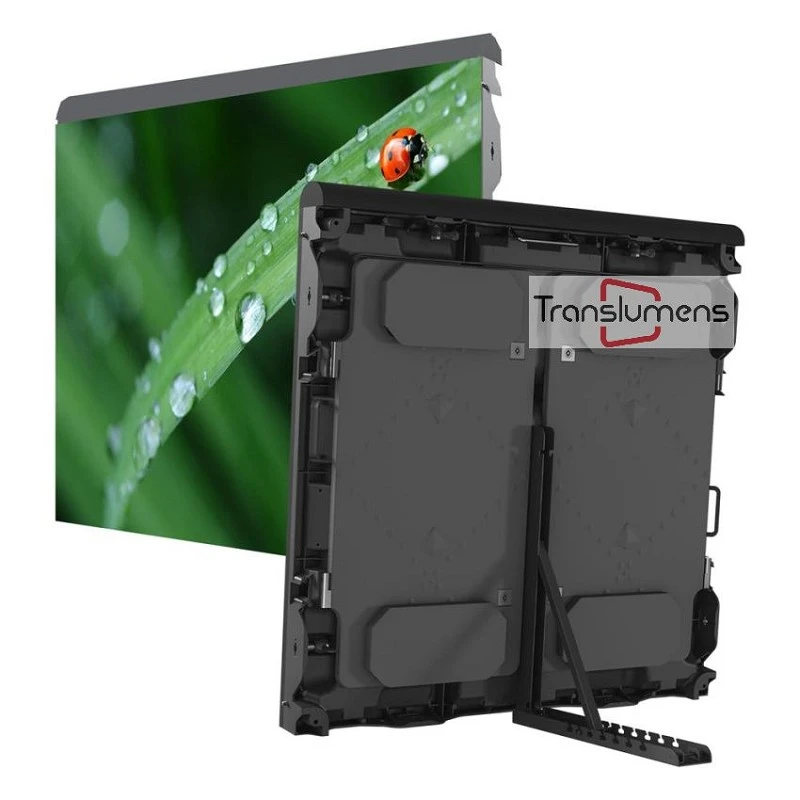
In general, P5 screens have a higher pixel density, which means they can display more detailed images. However, this also means that they tend to consume more power compared to P6, P8, and P10 screens. A P6 screen might consume around 30 - 40% less power than a P5 screen of the same size and brightness level. Similarly, a P8 screen could use even less power, and a P10 screen would be the most energy - efficient among these options. But keep in mind that the lower the pixel pitch, the better the image quality. So, it's a trade - off between power consumption and image clarity.
Cost Implications
The power consumption of a P5 Stadium LED Screen has direct cost implications. Higher power consumption means higher electricity bills. Let's assume that the electricity rate is $0.15 per kilowatt - hour. If your 50 - square - meter P5 screen (consuming 25 kilowatts) runs for 8 hours a day, the daily electricity cost would be 25 x 8 x 0.15 = $30. Over a month (assuming 30 days), that's $900. And over a year, it's $10,800. So, it's really important to manage the power consumption to keep these costs down.
Why Choose Our P5 Stadium LED Screens
Despite the power consumption, there are many reasons to choose our P5 Stadium LED Screens. First of all, we offer a high - quality display with excellent image clarity and color accuracy. Our screens are also very durable and can withstand harsh weather conditions, making them perfect for outdoor stadiums. And as I mentioned earlier, we use energy - efficient LEDs to reduce the power consumption as much as possible.
We also provide comprehensive after - sales support. Our team of experts can help you with installation, maintenance, and troubleshooting. We can also offer advice on how to optimize the power consumption of your LED screen based on your specific needs.
Let's Talk
If you're in the market for a P5 Stadium LED Screen and want to learn more about power consumption or any other aspect of our products, I'd love to hear from you. Whether you're an event organizer, a stadium owner, or a marketing professional looking to make a big impact, we can work together to find the perfect solution for you. Don't hesitate to reach out and start a conversation about your LED screen needs.
References
- "LED Lighting Technology: Principles and Applications" by John Doe
- "Energy - Efficient Displays for Large Venues" by Jane Smith